
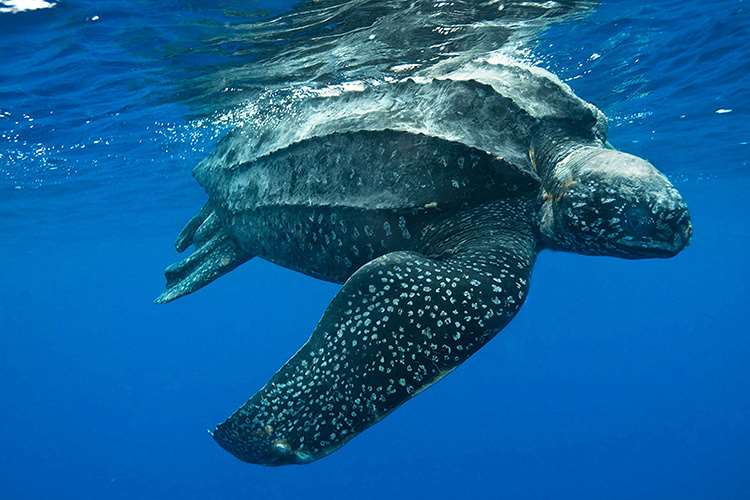
Photo by NOAA. Leatherbacks swim through international waters on their long migrations, where they are threatened by industrial fishing activities. Turtle Island Restoration Network has been working for decades to protect this critically endangered species.
After more than two decades of negotiations, a landmark global treaty to protect our oceans was finally ratified in September! With the 60th nation’s approval, the number required for adoption – the United Nations High Seas Treaty on Biodiversity Beyond National Jurisdiction will come into force in January 2026.
Turtle Island Restoration Network has been proud to be part of the High Seas Alliance for over a decade and to help make this moment possible. This treaty gives us a powerful new tool to protect marine life in international waters—covering nearly half the planet and two-thirds of the ocean beyond any country’s jurisdiction.
The treaty allows for the creation of marine protected areas, regulates the use of marine genetic resources, and ensures fair sharing of benefits. It also promotes capacity building and requires environmental impact assessments for activities in these vast ocean regions. One of its most ambitious goals: to place 30 percent of the high seas under protection by 2030.
While the United States signed the agreement under the Biden Administration, the Republican Senate has not yet provided the “advice and consent” needed for full U.S. ratification. And as with all U.N. treaties, enforcement is limited—but ratifying countries pledge to uphold it and can work together to encourage others to respect its provisions.
This treaty comes at a critical time. Previous actions, such as President Trump’s executive order allowing NOAA to permit deep-sea mining in international waters, risked violating the U.N. Law of the Sea treaty, which forbids mining until proper global regulations are in place. The International Seabed Authority, responsible for creating those rules, has repeatedly delayed their issuance.
The ratification of the High Seas Treaty is a major step forward, giving us new leverage to protect marine wildlife—like turtles, whales, and sharks—and the ecosystems they depend on. But the real work begins now: creating and enforcing protections that keep our oceans healthy and vibrant.
With your support, Turtle Island Restoration Network will continue to fight for these protections and ensure the high seas remain a safe home for marine life.


