
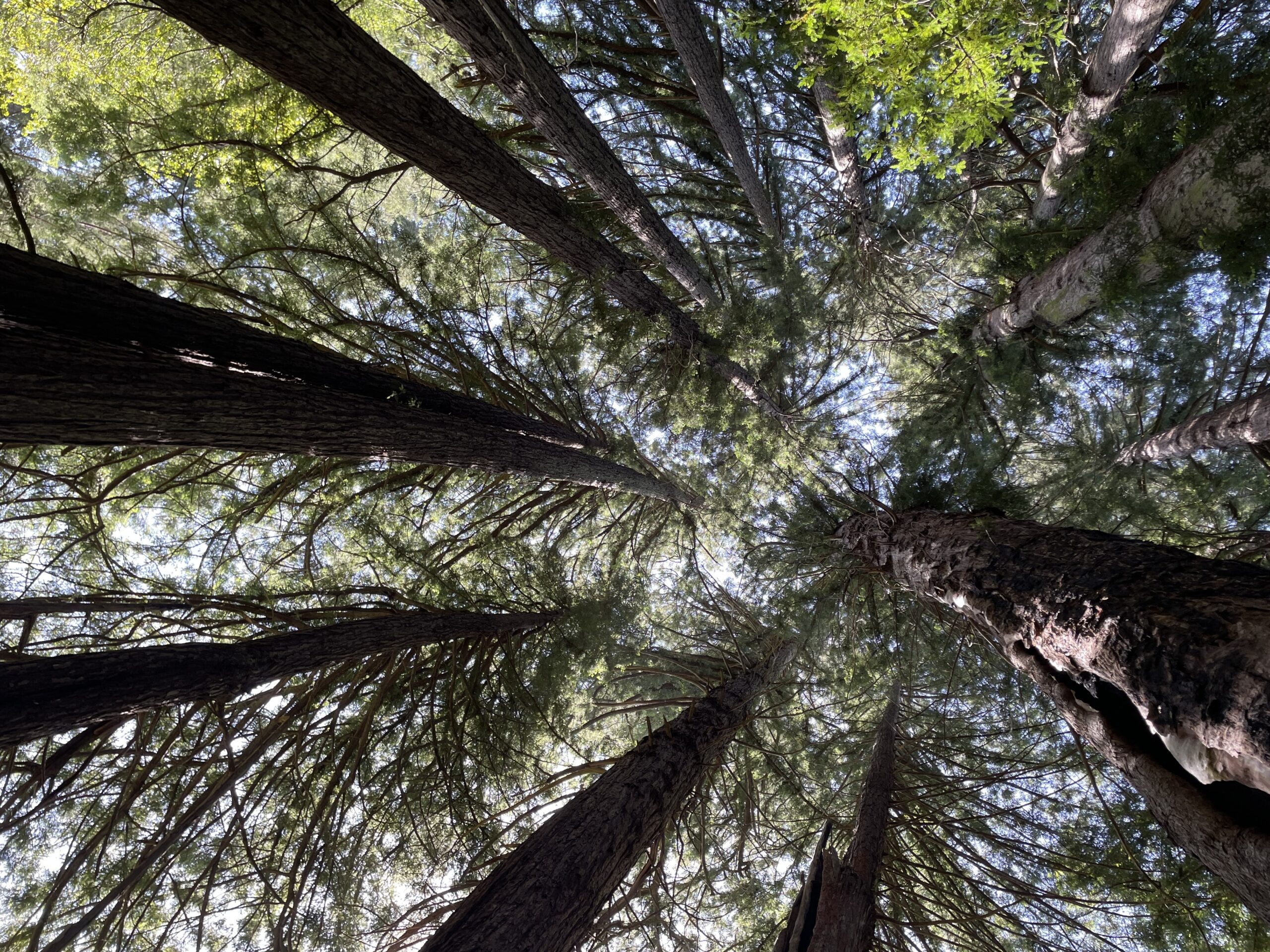
Written by 10,000 Redwoods! Program Manager, Dinah Sandoval.
When people think about environmental restoration, they often picture a single action: planting a tree, cleaning a beach, restoring a stream. While these actions matter, meaningful restoration requires much more than any one intervention. Ecosystems are interconnected, and the challenges they face are interconnected as well.
That understanding is one of the reasons I was drawn to Turtle Island Restoration Network (TIRN).
For nearly four decades, TIRN has approached conservation through an ecosystem lens. Protecting marine life is not simply about protecting what happens in the ocean. It requires policy change, scientific research, litigation, community engagement, education, and shifts in how people understand their relationship with the natural world.
After all, marine life does not recognize the borders, regulations, and systems that govern human societies. Yet it is profoundly affected by them. The health of our oceans is shaped by decisions made far upstream—in forests, watersheds, farms, communities, and government offices.
TIRN understands this interconnectedness. The organization has spent decades building partnerships, mobilizing grassroots supporters, engaging volunteers and interns, and advancing science-based solutions to some of our most pressing environmental challenges. Its work is informed not only by research, but by years of experience restoring ecosystems and advocating for their protection.
That same systems perspective makes redwood restoration a natural extension of TIRN’s mission.
Located in West Marin, an area once surrounded by towering redwood forests, TIRN is uniquely positioned to help restore a landscape that has been dramatically altered over the past two centuries. The organization maintains strong relationships with conservation agencies, environmental organizations, local landowners, and community members who all have a role to play in rebuilding healthy ecosystems.
Just as importantly, TIRN brings together the expertise needed to make restoration successful. From native plant knowledge and watershed restoration experience to systems thinking and community engagement, the organization understands that lasting change happens when ecological and human systems are strengthened together.
Why Redwoods?
 Few trees capture the imagination quite like the coast redwood.
I often wonder what it must have felt like for the first settlers to encounter these forests. Towering hundreds of feet into the sky, surrounded by an abundance that seemed endless, redwoods provided shelter, lumber, transportation, and the raw materials that helped build communities throughout California.
What many people did not fully understand at the time was how long it takes for a redwood to become mighty.
Entire cities were built from these ancient forests. Today, only about five percent of old-growth coast redwoods remain.
For me, planting redwoods is, in many ways, an act of environmental reciprocity.
These trees have given so much to support human wellbeing. They have sheltered us, provided resources for us, and shaped the landscapes we call home. Caring for them now is an opportunity to reciprocate that relationship.
At the same time, our perception of redwoods has shifted.
People travel from around the world to stand among them—not for what they can take from them, but for what they can experience. Redwoods inspire awe, peace, reflection, and a sense of connection to something larger than ourselves.
That shift in perspective matters.
We are living in a time when concerns about climate change continue to grow, and many young people struggle to imagine a hopeful future. Environmental challenges can feel overwhelming, distant, and impossible to solve.
Planting a redwood offers a different story. It is a tangible act of hope.
Redwoods help stabilize watersheds, support biodiversity, improve ecosystem health, and capture significant amounts of carbon over their long lifespans. Mature redwoods possess remarkable resilience, including the ability to withstand and recover from wildfire. Their benefits extend far beyond the forests they inhabit.
Yet perhaps their greatest contribution is the mindset shift they inspire.
A redwood is planted not for today, but for generations to come. Planting one requires believing that the future matters and that our actions today can shape it.
Planting redwoods is about more than restoring trees. It is about strengthening relationships—between people and place, between communities and ecosystems, and between present generations and those who will inherit the world after us.
In that sense, every redwood planted is both an ecological investment and a declaration of hope.
And hope, when paired with action, can be a powerful force for restoration.
To learn more about the 10,000 Redwoods! Program, and stay up to date with new developments, please visit the page here!


