

For Immediate Release, August 10, 2026
Contacts: Joanie Steinhaus, Ocean Program Director, joanie@seaturtles.org
Brittany McWhorter, Gulf Environmental Program Coordinator, brittany@seaturtles.org
Gulf Coast Communities Rally in Galveston to Defend the Endangered Species Act:
Turtle Island Restoration Network to lead local Day of Action calling on Congress to protect Gulf species from offshore drilling threats
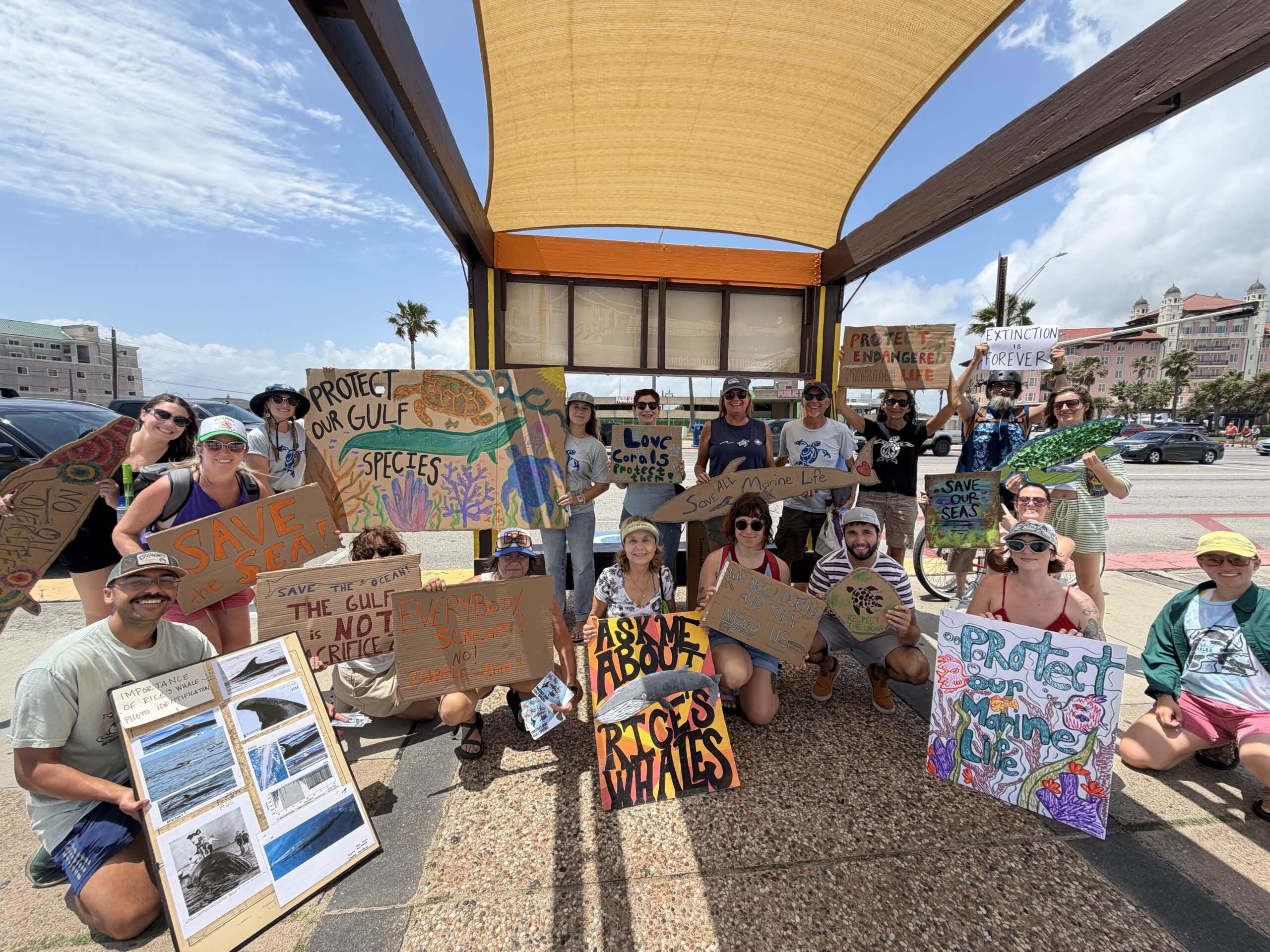
GALVESTON, TEXAS — On Saturday, August 15th, coastal communities will come together in Galveston for a rally calling to uphold protection of endangered wildlife in the Gulf of Mexico and urging Congress to take action following a decision that removed Endangered Species Act protections from more than 20 Gulf species in connection with offshore oil and gas activities.
Led locally by Turtle Island Restoration Network, the Galveston rally is part of a Gulf-wide Action bringing together communities across the five Gulf states to demonstrate that people care deeply about the wildlife, ecosystems, and waters that define the Gulf of Mexico.
“Endangered species protection has been in place since 1973, and it has worked to bring several species, including the Texas state sea turtle- the Kemp’s ridley, back from the brink of extinction”, said Joanie Steinhaus, Ocean Program Director. “For the past 50 years the oil and gas industry has worked in the Gulf, making record breaking profits, with this protection in place. The decision to eliminate this protection must be reversed to ensure the long-term health and continued existence of all threatened and endangered animals in the Gulf.
For more than five decades, the Endangered Species Act has provided critical protections for wildlife in the Gulf of Mexico. But at the end of March, a government committee made a decision that environmental advocates say puts those protections, and the future of Gulf wildlife, at risk. The exemption allows offshore oil and gas activities to move forward despite the potential consequences for more than 20 endangered and threatened Gulf species.
Among those at risk are the critically endangered Kemp’s ridley sea turtles, which depend on Gulf beaches to nest; and Rice’s whales, with only approximately 51 individuals remaining. Other species affected include manatees, queen conchs, smalltooth sawfish, and coral species that cannot simply relocate when their habitat becomes unsafe.
The threat is particularly immediate for sea turtles. Every summer, thousands of hatchlings emerge from nests along Gulf beaches and make the perilous journey to the water. Once they enter the Gulf, they face a host of natural and human-caused threats, including those associated with offshore industrial activity.
The Galveston rally will give local residents, conservation advocates, families, and visitors an opportunity to stand together for these species and call on Congress to pass the Protect Gulf Life Act and use every available congressional oversight tool to restore Endangered Species Act protections for Gulf wildlife threatened by offshore drilling.
Community members are encouraged to bring their best sea turtle and Rice’s whale signs and join the rally to use their voices for Gulf wildlife, or join us on Thursday, August 13 at the Naked Iguana Brewery for a sign making workshop, details here.
Event Details:
–What: Rally for Gulf Wildlife / Gulf Coast Day of Action
–When: Saturday, August 15, 2026, 10–11 a.m. Central
–Where: Balinese Room Pier marker, 2107 Seawall, Galveston, TX
–Who: Hosted by Turtle Island Restoration Network’s Gulf of Mexico team, in collaboration with the Endangered Species Coalition
To learn more about this event, visit https://seaturtles.org/event/rally-for-gulf-wildlife-august-15/
To sign on in support of the Protect Gulf Life Act, visit https://seaturtles.org/action-alert-urge-your-legislators-to-support-the-protect-gulf-life-act-h-r-8919-beyer-bill/
Turtle Island Restoration Network is a global ocean conservation nonprofit with offices in California and Texas, whose mission is to inspire and mobilize people around the world to protect marine biodiversity, the oceans and watersheds that sustain all life on Earth.


