
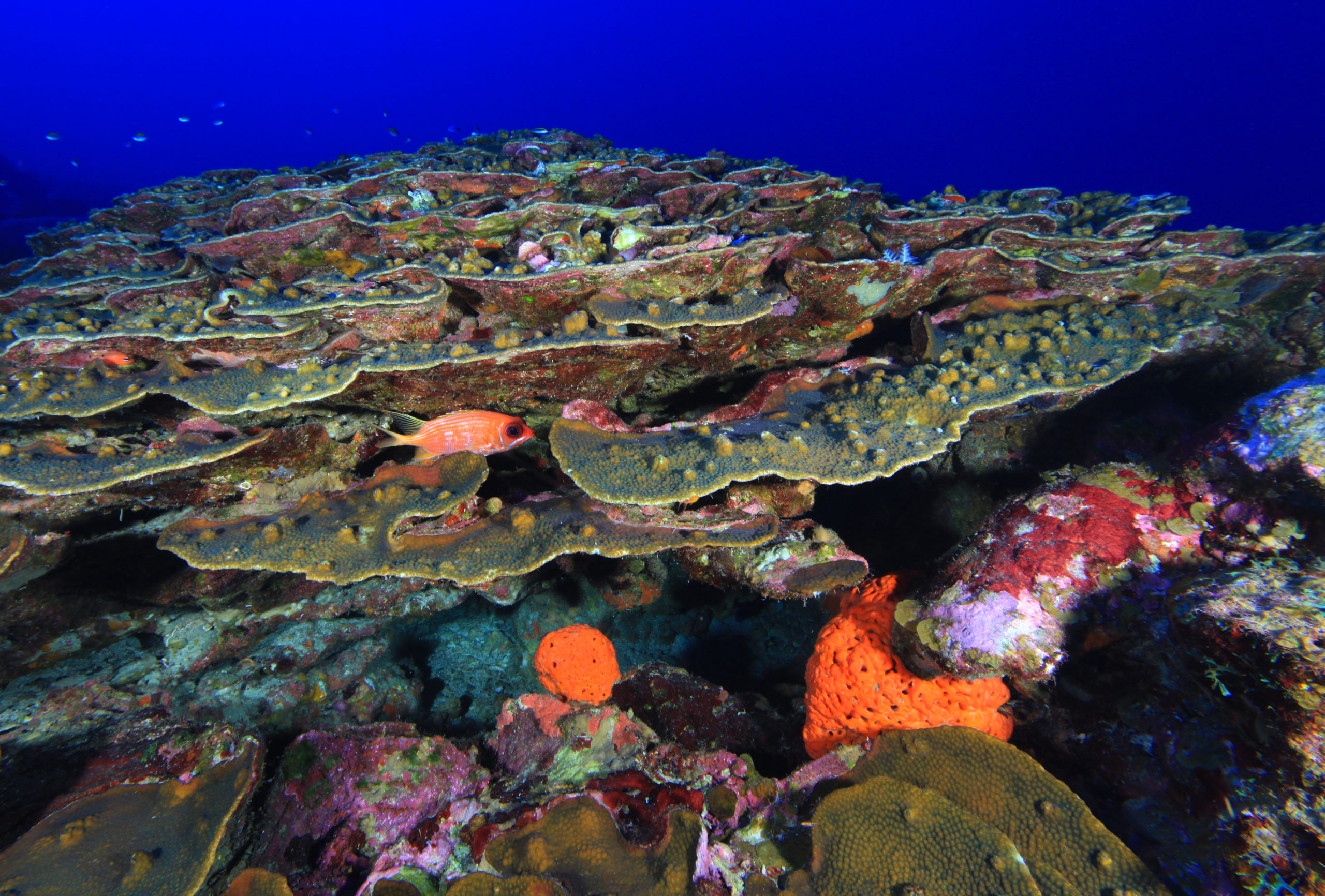
Photo of the Flower Gardens Bank by Greg McFall.
Beneath the surface of our nation’s waters lies a living network of stories, species and heritage – all safeguarded by America’s National Marine Sanctuaries. Established more than 50 years ago in response to the Santa Barbara oil spill, these “underwater national parks” now span over 785,000 square miles, from vibrant coral reefs in Hawai‘i and Florida to historic shipwrecks in the Great Lakes. On National Marine Sanctuary Day, we celebrate this extraordinary system of 18 protected areas that preserve our ocean’s beauty, history and biodiversity while keeping room for recreation, research and community connection. National Marine Sanctuary Day is a clear reminder that these sanctuaries don’t just belong to the sea and its inhabitants, they belong to all of us who care about the past and the future!
Channel Islands National Marine Sanctuary
Officially designated a National Marine Sanctuary in 1980, and expanded in 2007, this string of islands off the coast of Southern California encompasses approximately 1,470 square miles of the Pacific Ocean. Positioned between two major ocean currents, the Channel Islands support remarkable biodiversity and Chumash history. Not to mention, scuba diving through the iconic kelp forests is unlike anything else!

Flower Garden Banks National Marine Sanctuary
The Flower Garden Banks lies about 100 nautical miles off the coast of Galveston, in 1992. It’s home to the northernmost coral reefs in the U.S., formed thousands of years ago atop salt domes that pushed the seafloor upward to create underwater banks. The sanctuary teems with nearly 300 fish species and over 20 types of coral, along with sea turtles, sharks, rays and marine mammals – a key refuge for both biodiversity and the Gulf’s fishing heritage.

Greater Farallones National Marine Sanctuary
Originally designated in 1981 and expanded in 2015, the Farallones spans over 3,200 square miles of Pacific Ocean northwest of San Francisco Bay. From open ocean and reefs to wetlands and coastal beaches, this area benefits from California’s nutrient-rich upwelling, supporting critical habitat for endangered species and one of the world’s most significant white shark populations. If you’d like to learn more, we recommend diving into the novel, The Devil’s Teeth!

Hawaiian Islands Humpback Whale National Marine Sanctuary
Spanning 1,400 square miles of Hawaiian waters and providing critical habitat for thousands of North Pacific humpback whales each winter, this sanctuary was designated in 1992. Unlike other sanctuaries, it focuses on a single species and relies on existing regulations for management, while promoting research, education and long-term monitoring to support the conservation of these iconic whales.


